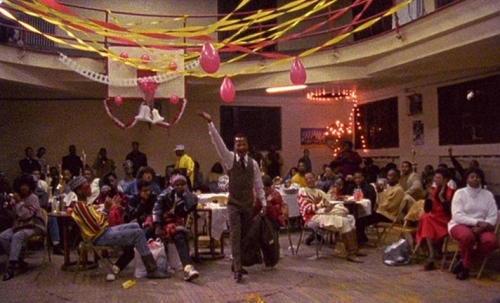
Paris Is Burning is a documentary by Jennie Livingston from 1990 that focuses on the gay, queer, trans, and drag performers that would populate balls and pageant competitions in the streets of New York City as the subjects. The documentary, though praised for it’s pageantry and it’s “lightning in a bottle” quality it holds as queer historical document today, has received it’s fair share of criticism and revilement over the years as well. However, this negative reaction was not at all in reference to the film’s queer content but instead in reference to the film’s presentation and framing of the individuals at it’s center.

As bell hooks notes specifically in her critique of the documentary, none of the gay or queer performers that are featured in the film received any form of payment from the documentary’s director, Livingston, who would go on to receive critical acclaim and international media attention concerning the construction and making of her film. This notion of ownership and how different people are presented and seen by others becomes the primary issue for a critic such as hooks. As a white cisgender lesbian, Livingston has faced critique for displaying a community that she herself is not a part of. In particular, hooks criticizes Livingston for never once showing herself within the documentary, not even sitting with or talking to some of the people captured within the film’s frames. In Livingston’s defense, as a documentarian she had no intention of collating herself and her subjects whatsoever. She was solely interested in capturing the existence of these people and these balls, not her interaction with them. To hooks, this positioning expounds upon the problematic nature of Livingston’s filming and presence at the balls to begin with. hooks argues that with Livingston helming the filmic vision, the documentary takes on an exploitative tone in which the subjects of the film are undoubtedly othered by the outsider/in perspective that the filmmaker takes when entering into the realm of the documentary.
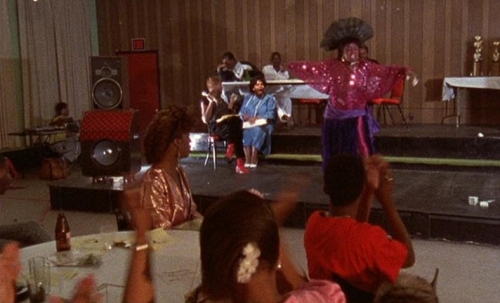
Essentially, hooks reduces the film’s impact to mere spectacle, even taking issue with the presentation and idea of drag itself. While it seems hooks is hung up on the gendered aspects of drag, I am more inclined to agree with Judith Butler’s examination of the film in which she explains that drag is both conforming to gendered norms as well as breaking and bending them at the same time. While hooks may have some valid points when she specially touches on Livingston’s class and race in relationship to that of her subject matter, but is completely off base when it comes to her view of drag and the “presentation of womanhood” under a misogynistic purview. Butler negates her point, making the argument that not all individuals that participate in drag in the film or in the world are men and not all the individuals participating are even gay. Butler illuminates drag as an art form for everyone to partake in and thus, is not outwardly misogynistic.
While Paris Is Burning features culture and life and individuals that would be lost to the world of film if not captured on camera, it still remains important to be aware and critical of what could be viewed and misrepresentation and mishandling of experiences that a rarely viewed or experienced in a cinematic fashion.
Works Cited:
Butler, “Gender Is Burning”
hooks, “Is Paris Burning?”
 Film, Gender, Sexuality
Excellent blog post! I agree with you and Judith Butler on the point that drag is both conforming to gendered norms as well as breaking and bending them at the same time. I believe that because drag is performed in queer spaces and it has no relation to sexuality or gender, that it is inherently anti-binary and positive.
LikeLike