“The Night Porter”: Motives of Exploitation, Representation, & the Theater of Fascism

Released in 1974, The Night Porter is an English-language erotic drama by the Italian director Liliana Cavani, and starring the British actors Dirk Bogarde & Charlotte Rampling. Bogarde plays a lonely night porter, Max, living and working at a hotel in Vienna in the late 1950s. Everything seems rather unremarkable about the day Max is having minutes into the film when he makes a chance & totally fatalistic encounter with a young woman by the name of Lucia, played by Rampling, who happens to be staying with her husband in the hotel where Max is now working. Doomed from the moment they lay eyes upon each other again, it is this moment that the film reveals the past relationship between these two characters and thus the fascistic bond they share by way of cutting to and from a series of flashbacks. In these flashes of images of prisoners in telltale striped pajama-reminiscent garb surrounded by SS. Nazi officers in perfect regalia, the film comes into focus and locks into gear.
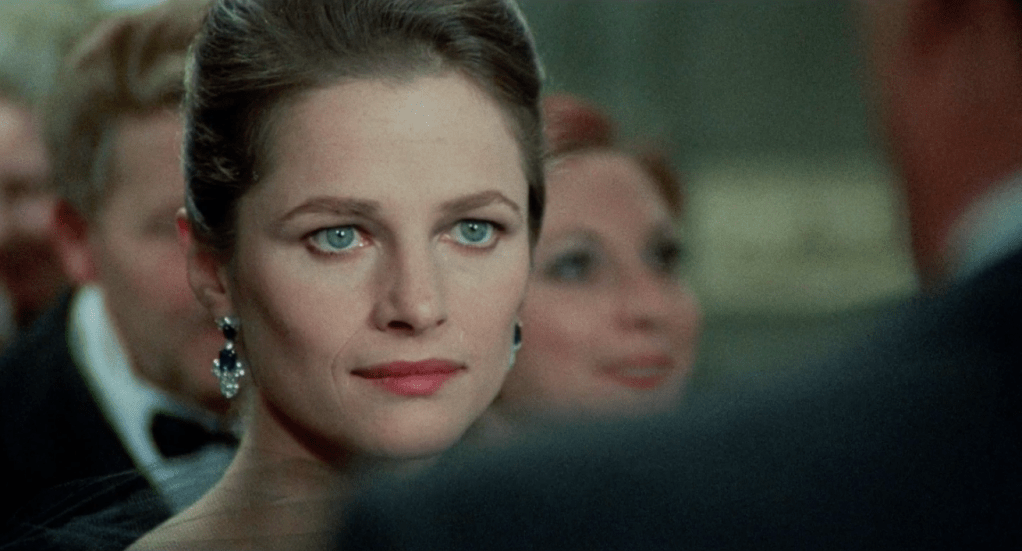
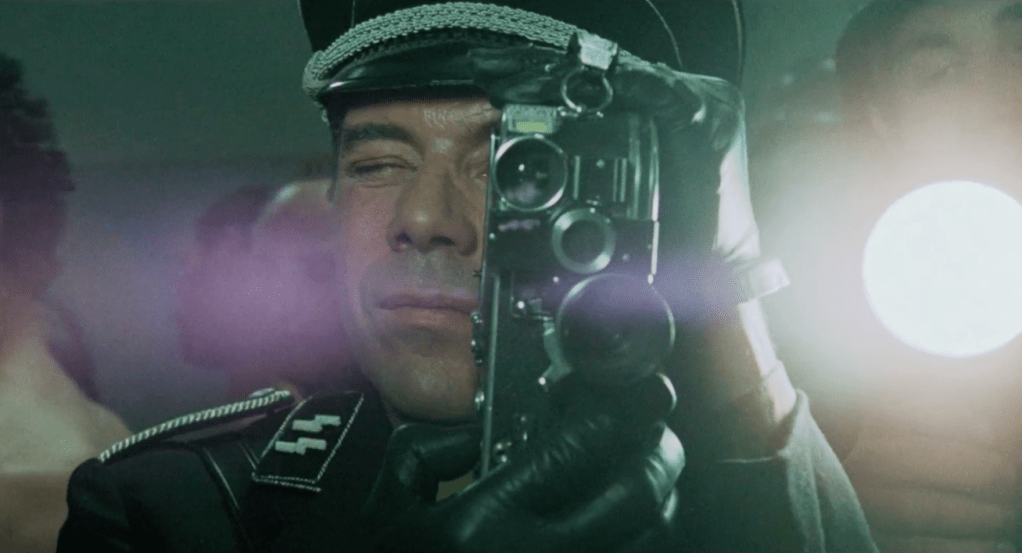
Suddenly, Lucia is pictured amidst the disparate faces, with shorter hair and dressed in a pink dress with matching bow, suggesting a much younger girl than the refined and suddenly petrified woman introduced moments prior. In the next seconds, Max is seen no longer in his three-piece suit but in a pitch black SS. officer uniform complete with a whirring film camera. And then, the point of no return for the film’s audience as the camera appearing in Max’s hands is suddenly facing the viewer with it’s lens. The viewer is all at once implicated and entrapped by the history of Max & Lucia’s intrigue and depravity filled relationship just as they have been and remain to be all over again. Liliana Cavani, the filmmaker behind the camera, is deliberate with this sequence as it reveals the very subject of the film itself: the complicity on both the individual level as well as the imagistic, filmic, and representative levels with the codes and transgressions of the specially fascistic past in question. It is in this complicity that the film finds it’s double life: both the imagery within the flashbacks and imagery of real time within the film occupy the same space and hold the same weight. The past is present which is fated by the concurrent past.
Interestingly enough however, The Night Porter stands as an extremely controversial film that many have deemed to exploitative and even pornographic in and of itself. Premiering only a year before 1975’s infamous and actually pornographic American film Ilsa, She Wolf of the SS is released, The Night Porter received rather mixed and frequently damning reviews on it’s initial run, especially within the American press and criticism circles. With titles of perverse and most of all exploitative, the responses beg the question: is the film exploitative? It is upon this question that the film walks a delicate line and in fact, one of the very purposes of the film’s existence as a piece of media is to commentate on this very idea exploitation and moral questions of the representation of fascism within a filmic mode. 

In their book, The Unmaking of Fascist Aesthetics, author Kriss Ravetto defines fascism in multiple ways. In particular, they choose to highlight the historical idea that fascism and more specifically Nazism, apart from being responsible for some of the most horrific atrocities the world has even witnessed, lack any greater or truer ideology or course of action beyond the guise of an intense sense of nationalism masking ethnic cleansing. Ravetto bolsters Walter Benjamin’s idea the the politics of fascism was simply the “aestheticization of politics” or politics as merely aesthetic in order to reach the desired end of control by means of domination and violence. In addition to this point, Ravetto also brings up Philippe Lacoue-Labarthe’s theory on nazism as not at all a legitimate or sensible political system, ideology, or party but rather, “the rhetorical performance of myth” or “a myth of a myth”. Despite this performative and theatrical presentation that was often attached to examples of fascism, the actions Hitler & Mussolini’s regimes enacted cannot be forgiven and cannot and have not been erased by time. Despite the surface-level rejection of fascism in a post-war era, fascistic ideals still appear in spades in capitalist and bureaucratic dealings. Ravetto themselves ultimately in their research come up against, “the impossibility of disengaging visual and rhetorical constructions from political, ideological, and moral codes.” Aesthetics or even the representation of said aesthetic cannot be separated from ideology and action, no matter the politics involved but especially when it concerns fascism and the lasting impact of the actions that the political ideology has left behind for an eternity.
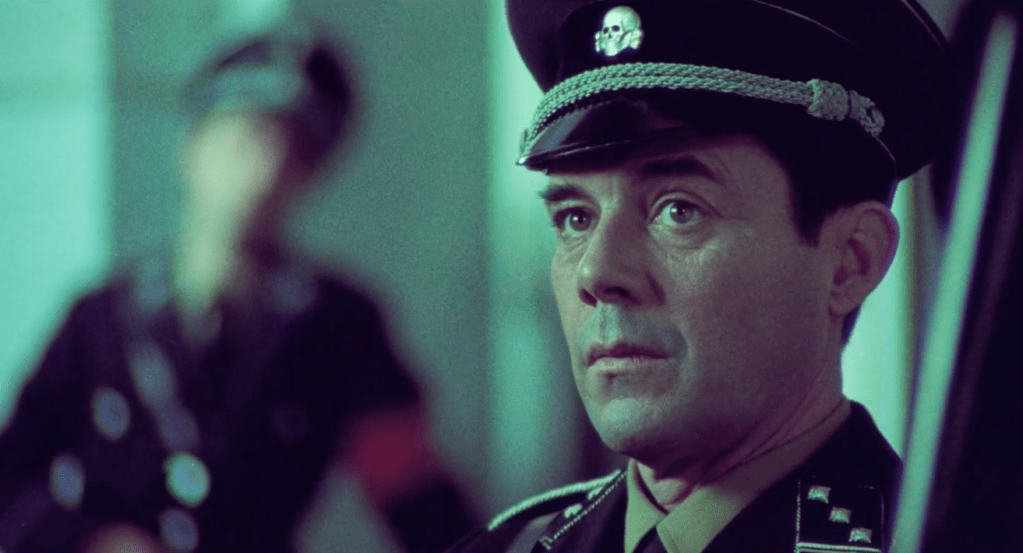
In consideration of the film’s understanding and portrayal of fascism of an ever-infectious and structured desire that still permeates into the present moment from years & years in the past as well as the filmmaker and actor’s documentarian and military involvement in the Third Reich’s emancipated concentration and death camps at the end of World War II, The Night Porter lacks the motive of exploitation. After studying as the only women in her film school, Liliana Cavani would travel all over her home country of Italy as well as all across Europe gathering enormous amounts of documentary footage for documentary assignments she had been sent on. This time and constant filming resulted in Cavani’s two first formal documentary projects. They included: History of the Third Reich (1961–62) and Women of the Resistance (1965). Both of these documentaries focus on illuminating the atrocities and war crimes against humanity that went on inside of the camps, the second one specifically focusing on women prisoners of war who survived that camp and were able to to tell their story. With this experience, not only did Cavani retain an exponential amount of information about the actions of the Third Reich, but she was actually able to understand these concepts from the actual people who experienced them as well as with the sensibility of an honest documentarian. In terms of the actors’ experience with WWII and its aftermath, Dirk Bogarde was actually enlisted as a British soldier and was deployed and did fight in the war. He actually had experiences as some of the first Allied soldiers to ever reach and begin the emancipation as well as the discovery of unimaginable atrocities on the sites of concentration camps. Bogarde and Rampling had actually acted together before on The Damned which was released about five or so years prior to The Night Porter and similarly dealt with individuals dealing with the ramifications of their fascistic political entanglements. With the combination of their collective research and experience, the team was well prepared to make media concerning fascism and it’s effects while making a clear statement against it as a normative political ideology.
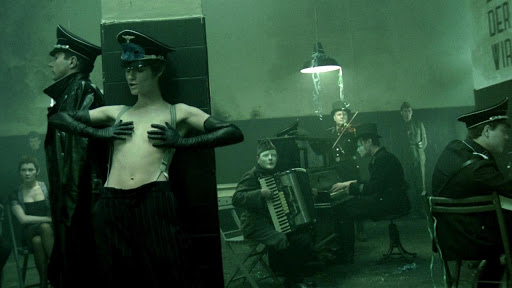
In a multitude of scenes intermixing film with theater, opera, music, and dance, Cavani works to theatricalize the seductive and controlling antics as fascism as a political ideology all confined within the parameters of flashback filmic memory and yet transmuted to the present by way of lasting desire. The extended passion of glances between the two lovers, Lucia and Max, is continued a second time with the setting of the Viennese opera. This is not, however, the only time the film cloaks the rekindling of fascist ideals with the aesthetics of theater. The first other significant theatrical episode comes earlier on in the film when Max meets one of his old covert Nazi friends at the hotel for what seems to be a semi-regular occurrence. The man performs a balletic dance while Max moves a spotlight for him. The scene  quickly swells with louder music and flashes backward to him performing the same dance but in nothing but a small dance belt. In a parallel flashback, Lucia is seen in probably the film’s most iconic scene dancing and imitating Marlene Dietrich’s singing of a German standard while wearing elements of a male SS officer’s uniform. While she is bare chested, both Lucia as well as the male dancer are sexualized in these scenes. However, the male dancer is most certainly the more nude one and dances with a sort of pumped up desperation or enflamed desire. Lucia on the other hand languid, seductive, and powerful. Dressed as an officer, Lucia plays a different kind of role as she walks through the room. In way, she becomes just as real of a Nazi within the uniform as anyone even though she still remains a prisoner. Both performative sequences reiterate and reinforce the idea of the aesthetics of politics being on display as well as further examinations of desire and what it is to be implicated by the aesthetics of fascism. Interestingly, both sequences purposefully subvert expected gender and sexual conformity through wardrobe, framing, and music.
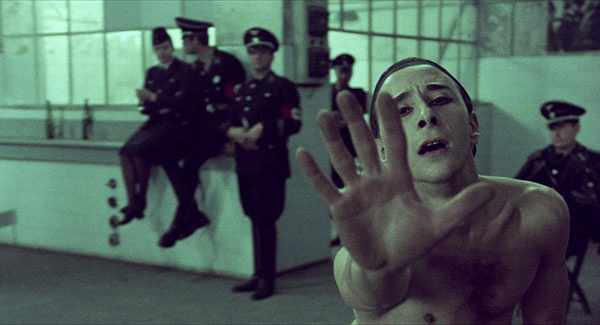
This swirling mix of lingering but pulsating memory and supercharged desire combine to synthesize a simulacrum of the dominance and control of fascism in the form of a sexual, abusive, and eventually codependent and ultimately doomed union. In the final quarter of the film, the two twisted lovers are essentially stand in’s for wartime prisoners from their collective past and Max’s once safe and quiet apartment has become a tiny prison that has already be enclosed upon and surrounded by Max’s old Nazi friends. One of the primary reasons that this film is so unconventional in the communication and signing of it’s messaging is the fact that the film does not rest on a binary sense of good and evil nor does it subscribe to a binary view or gender or even morality. Relationships such as Nazi and concentration camp prisoner that seem clear-cut and easy to decipher in the moment become complex and refracted as violence and sexuality converge within the narrative, exploding the sense of assigned sexual or gendered roles. As Max’s small flat becomes what seems to be the couple’s final resting place as hunger as well as Nazi agents begin to close in, the dynamics of this already ruinous relationship change even more. When she was essentially helpless when in the camp, this new situation allows Lucia both a position of victimhood and agency—she can choose whether or not to stay with Max or not. In choosing to stay, Lucia delves into sadistic exercises of her own including leaving glass for Max to step on as well as eating the sparse rations of food and leaving none for him Whereas explicit theatrical and operatic scenes and sets were staged previously to creatively display the seductive violence of nazism, it is Max’s apartment that is now the set stage. They are now the actors performing the barbarity of the Nazis crimes within the systemic and memory fueled abuse of their own relationship. The more they both give into the desire they have in the moment, the more the past is dug up and all at once is revived in the current time. 

At the end of the film, the two lovers are finally shot to the ground dead by the nazis that had been hunting them all along. They lie motionless in the final frame, alone, cold, and utterly unknowable. In a film that brings the smoke and mirrors of fascist aesthetics out into clear sight, it’s final moments demonstrate that fascism’s ebbing heartbeat still continues due to secrecy and the implicit embedding of fascistic culture and ideology into the seams of capitalism that still ripple to this day. The Night Porter reminds us that fascist ideology lives on if precaution is not taken and often rears it’s head in the most surprisingly desirable and seductive way.

Bibliography

The Night Porter. Cavani, 1974. Film.

Ilsa, She Wolf of the SS. Edmonds, 1975. Film.

The Damned.Visconti, 1969. Film.

Marrone, Gaetana. The Night Porter: Power, Spectacle, and Desire. The Criterion Collection. DEC 9, 2014. Web.

Insdorf, Annette. The Night Porter. The Criterion Collection. JAN 10, 2000. Web.

Ravetto, Kriss. The Unmaking of Fascist Aesthetics. Minneapolis: University of Minnesota, 2001. Print.

“Blue”

Blue by Derek Jarman is a British experimental film from 1993. It stands as Jarman’s last testament as an artist, filmmaker, and human being as his life would be taken by HIV/AIDS mere months after the completion of the project. Having already lost most of his eye-sight to the virus, Jarman began production on Blue when he was nearly blind; his vision tinged and colored with shades of blue. Thus, rather than entrusting the task of his filmic visual language to another person’s eyes entirely, Jarman chooses instead to incredibly par-down the expansiveness and complexity of his visual vocabulary, boiling his last film down to one single constant image. Specifically, the image takes the form of a singular color, a singular deep hue of dark, royal blue that remains on the screen for the entirety of the film’s 80 minute runtime. Consuming the screen, the spectator is meant to stare at this given color and be consumed by it themselves, just as Jarman’s eyesight and mind had been as well. All the while, one can listen to the voices of Jarman himself as well as his friends narrating the remainder of the life experience Jarman has left; which are usually devoted to the descriptions of medical treatments and poetic musings on life and art. There are some critics, however, who claim that Jarman’s Blue is not a film at all but rather some sort of hybrid radio play. This is all hinging on the idea that the film contains no visual language whatsoever. This is false.

I believe those that decry Blue as not a film at all are simply ignoring the very real visual aspect of the experience. A color is something to look at, watch, examine, and consider. Perhaps it is not enough for some or for those with limited attention spans, but it is certainly enough for me. Not allowing Blue to be spoken of as a filmic work (which it is) is not allowing the respect for the project that Jarman intended.

“International Klein Blue” is the specific blue hue Jarman utilizes.

In terms of how the film troubled me personally, it certainly reminded me of the situation many people in the world are facing currently. Isolation, loneliness, uncontrollable illness, the breaking down of the human body, drug treatments, the facing of one’s life and soul, and death. Jarman discussing his thoughts from his hospital bed seemed all to familiar in the light of what’s going on in certain places in terms of COVID-19 wards and the death and sorrow and fear that must occur there. 

In total, I found myself lucky and grateful that I was in the pain or having the experiences that Jarman was having while making this film. The film also made me very mournful specifically for the loss of queer life and life in general that was lost and eroded due to the AIDS crisis. Blue stands as a testament to Jarman’s career as a well as all victims of AIDS and those that refused to fade quietly away.

Bibliography:

Blue. Jarman, 1993. Film.

“Paris Is Burning”

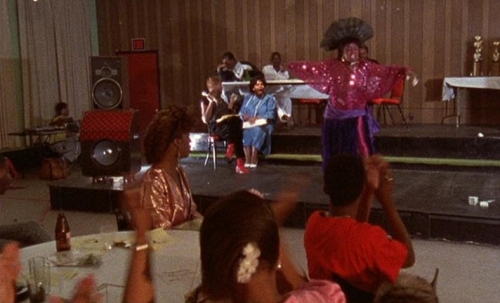
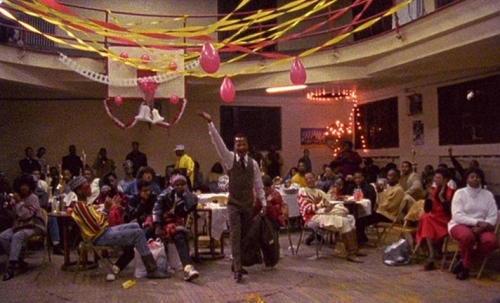
Paris Is Burning is a documentary by Jennie Livingston from 1990 that focuses on the gay, queer, trans, and drag performers that would populate balls and pageant competitions in the streets of New York City as the subjects. The documentary, though praised for it’s pageantry and it’s “lightning in a bottle” quality it holds as queer historical document today, has received it’s fair share of criticism and revilement over the years as well. However, this negative reaction was not at all in reference to the film’s queer content but instead in reference to the film’s presentation and framing of the individuals at it’s center.

Some of the individuals featured were filmed hanging out, sleeping, and soliciting on the pier.

As bell hooks notes specifically in her critique of the documentary, none of the gay or queer performers that are featured in the film received any form of payment from the documentary’s director, Livingston, who would go on to receive critical acclaim and international media attention concerning the construction and making of her film. This notion of ownership and how different people are presented and seen by others becomes the primary issue for a critic such as hooks. As a white cisgender lesbian, Livingston has faced critique for displaying a community that she herself is not a part of. In particular, hooks criticizes Livingston for never once showing herself within the documentary, not even sitting with or talking to some of the people captured within the film’s frames. In Livingston’s defense, as a documentarian she had no intention of collating herself and her subjects whatsoever. She was solely interested in capturing the existence of these people and these balls, not her interaction with them. To hooks, this positioning expounds upon the problematic nature of Livingston’s filming and presence at the balls to begin with. hooks argues that with Livingston helming the filmic vision, the documentary takes on an exploitative tone in which the subjects of the film are undoubtedly othered by the outsider/in perspective that the filmmaker takes when entering into the realm of the documentary. 

Queens, usually of black or latin decent, are typically the performers that people the ball scene.

Essentially, hooks reduces the film’s impact to mere spectacle, even taking issue with the presentation and idea of drag itself. While it seems hooks is hung up on the gendered aspects of drag, I am more inclined to agree with Judith Butler’s examination of the film in which she explains that drag is both conforming to gendered norms as well as breaking and bending them at the same time. While hooks may have some valid points when she specially touches on Livingston’s class and race in relationship to that of her subject matter, but is completely off base when it comes to her view of drag and the “presentation of womanhood” under a misogynistic purview. Butler negates her point, making the argument that not all individuals that participate in drag in the film or in the world are men and not all the individuals participating are even gay. Butler illuminates drag as an art form for everyone to partake in and thus, is not outwardly misogynistic.

While Paris Is Burning features culture and life and individuals that would be lost to the world of film if not captured on camera, it still remains important to be aware and critical of what could be viewed and misrepresentation and mishandling of experiences that a rarely viewed or experienced in a cinematic fashion.

Contestants walk to display “realness” in the balls. Both being someone else and not being at the same time.

Works Cited:

Butler, “Gender Is Burning”

hooks, “Is Paris Burning?”

“Tangerine”: Empowerment & Exploitation

Tangerine is a 2015 American independent film directed by Sean Baker and starring Kitana Kiki Rodriguez and Mya Taylor as Sin-Dee and Alexandra respectively; two transgender sex workers searching Los Angeles for Sin-Dee’s cheating pimp boyfriend on Christmas Eve. The casting and directing of this film is especially significant, however, in the particularity of explaining some of the critical responses to the film. While Mr. Sean Baker identities as a cisgender straight white male, the two actresses playing the lead characters are transgender, making Tangerine, a low budget dramedy filmed (to a wonderfully saturated effect) on an iPhone 5, somewhat of a landmark moment for trans history and trans lives documented in narrative cinema. It is the first time where transgender people are quite visibly playing trans characters and this fact is taken not as fodder for some sort of perverted, transphobic comedy but as a fact of these characters’ existences. It is quite significant to have characters such as these who’s stories have been so underrepresented for so long to be presented as the main characters within a Hollywood narrative exercising agency over their own womanhoods. However, it is these trappings and narrative bones on which the film builds itself and it’s concerns that have been critiqued by some and thus begs the question: where does Tangerine actually fall between the lines of empowerment and exploitation?

Shot on an iPhone 5, the film is able to capture the sun saturated look of LA.

In a 2015 article by Rich Juzwiak, it is made evident to the reader rather quickly that the film Tangerine drew an overwhelming amount of critical praise from the mainstream art and critical communities. This is true. The film was lauded upon it’s release and was subsequently nominated for numerous independent film awards, most frequently highlighting the film’s directing, writing, and acting. Juzwiak is critical of the makeup of the creative team. The author raises the point that since the film was written and directed by Baker and another cis, white, straight man, that it is impossible that it would be able to accurately portray the experiences of trans women. The article accuses the film of transphobia as evidenced by it’s portrayals of “angry black women” and trans women relegated to existing within the role of a sex worker or a sexualized and/or violent role. Particularly highlighted is Sin-Dee’s character arc with another woman named Dinah, as she is shown dragging the latter through town and abusing her for sleeping with her boyfriend. To this point, I feel that the film actually is much more progressive than this reviewer seems to think as it includes the experience of not only one black woman but many. Not only one trans woman appears in the film but multiple and not all of them purport to perform sex work. I do not find the film to be exploitative in terms of the subject matter it includes and presents. As agreed upon by another 2015 article by Morgan Collado, the film’s handling of the sensitive subject matter or sex work and poverty in LA is very realistic and important. To view the film as a reduction of the trans experience for a straight audience would be a fallacy. As the Collado article points out, Sin-Dee’s dominate and power exercised over Dinah disallows her from invalidating Sin-Dee’s womanhood. In Tangerine, it is often the trans women who are presented as having power. This issue of “presentation and representation” is further considered in Collado’s article as they examine how the film yields and exercises real-life transphobia, transmisogyny, and trans experience.

Sin-Dee drags Dinah across LA.

While Collado ultimately praises much of the film and particularly the agency the film gives to it’s trans characters, the author is critical of the character of Razmik. Razmik represents the “B” plot essentially. He is a taxi driver who, when he is not at home with his wife, daughter, and mother-in-law, has an attraction or fetish for transgender streetwalkers such as Sin-Dee and Alexandra. At the end of the film, Razmik is ultimately caught in this act by both his wife and mother-in-law and is shamed in a sense for his desire. He is “othered” by his own community just as Alexandra and Sin-Dee have been. This, however, is a criticized display of the draping of transmisogyny across a character that only uses trans characters for pleasure. In Collado’s view, Razmik is just as negative a figure as Chester, Sin-Dee’s cheating pimp boyfriend, as he has no respect for anyone or any woman in the film beyond his need for pleasure from these said women. He is not an ally or an other, but simply a user and a exploiter.

Razmik and his mother-in-law.

Tangerine is and actually remains to be one of my favorite movies. Not only because of the aesthetic experience of LA that it presents, but because of the unique lives and stories of its characters. Hopefully, as film continues to grow in it’s representation, perhaps people like Sin-Dee and Alexandra won’t seem as novel to us after all.

Citation:

Collado, Morgan, et al. “A Trans Woman of Color Responds to the Trauma of ‘Tangerine.’” Autostraddle, 27 July 2016, www.autostraddle.com/a-trans-woman-of-color-responds-to-the-trauma-of-tangerine-301607/.

Juzwiak, Rich. “Trans Sex Work Comedy Tangerine Is the Most Overrated Movie of the Year.” Gawker, defamer.gawker.com/trans-sex-work-comedy-tangerine-is-the-most-overrated-m-1717662910.

“The Celluloid Closet”

I remember watching The Celluloid Closet pirated in quarters off YouTube back in 2015 when I was a junior or senior in high school, having just come out as gay myself as well as a lifelong classic film geek. When I watched the documentary in high school, I remember experiencing a kind of thrill to see classic film tropes such as “the pansy” or simply femmy swishy movements performed by men on the silver screen. Being a little sheltered queer 16 year old, I had never really (up till that point) had any sense of the history of queer people and especially in Hollywood on movie screens. The idea of queer coding and signing was rather revelatory to me, and it was rather inspiring to see this overwhelming treasure trove of queer soaked imagery of usually gay and lesbian people. Equally inspiring was seeing many actors I beloved as well as towering queer figures I was just beginning to become familiar with such as Quentin Crisp and Harvey Fierstein talk about queer history and queer imagery with such specificity and candor. The film hit me as dated when I viewed it in high school, but watching it again now it strikes me much more as a wonderful time capsule that gives a lovely visual review of queer imagery in Hollywood within the 20th century. It was depressing then and depressing now again to view and consider how brutally queer characters were historically killed or corrected within the history of Hollywood. However, as the film makes the point of as it closes, I think there have been incredible strides in queer representation on screens across the globe. This movement in queer cinema (such as the eponymous New Queer Cinema movement in the 80s and 90s) cannot however be attributed to Hollywood but to the queer voices and artists that have been brave enough and lucky enough to speak and work outside of the system. Today, I believe the most diverse expressions of queer personhood can be found through television as streaming platforms have the luxury of producing an extremely wide array of stories. Reality television more than anything as well as documentary film have brought the real stories of queer people into people’s living rooms. Looking back to Hollywood, even a film such as Brokeback Mountain being released back in the mid-2000s was met with enormous critical and commercial controversy, was snubbed by the Academy, and features the death of one of the film’s queer protagonists. The Celluloid Closet is a fantastic capsule of gay signing and indirect queerness on screens, but it is significant and wonderful that film has progressed since this point in time.

Design a site like this with WordPress.com
Get started