Blue by Derek Jarman is a British experimental film from 1993. It stands as Jarman’s last testament as an artist, filmmaker, and human being as his life would be taken by HIV/AIDS mere months after the completion of the project. Having already lost most of his eye-sight to the virus, Jarman began production on Blue when he was nearly blind; his vision tinged and colored with shades of blue. Thus, rather than entrusting the task of his filmic visual language to another person’s eyes entirely, Jarman chooses instead to incredibly par-down the expansiveness and complexity of his visual vocabulary, boiling his last film down to one single constant image. Specifically, the image takes the form of a singular color, a singular deep hue of dark, royal blue that remains on the screen for the entirety of the film’s 80 minute runtime. Consuming the screen, the spectator is meant to stare at this given color and be consumed by it themselves, just as Jarman’s eyesight and mind had been as well. All the while, one can listen to the voices of Jarman himself as well as his friends narrating the remainder of the life experience Jarman has left; which are usually devoted to the descriptions of medical treatments and poetic musings on life and art. There are some critics, however, who claim that Jarman’s Blue is not a film at all but rather some sort of hybrid radio play. This is all hinging on the idea that the film contains no visual language whatsoever. This is false.
I believe those that decry Blue as not a film at all are simply ignoring the very real visual aspect of the experience. A color is something to look at, watch, examine, and consider. Perhaps it is not enough for some or for those with limited attention spans, but it is certainly enough for me. Not allowing Blue to be spoken of as a filmic work (which it is) is not allowing the respect for the project that Jarman intended.
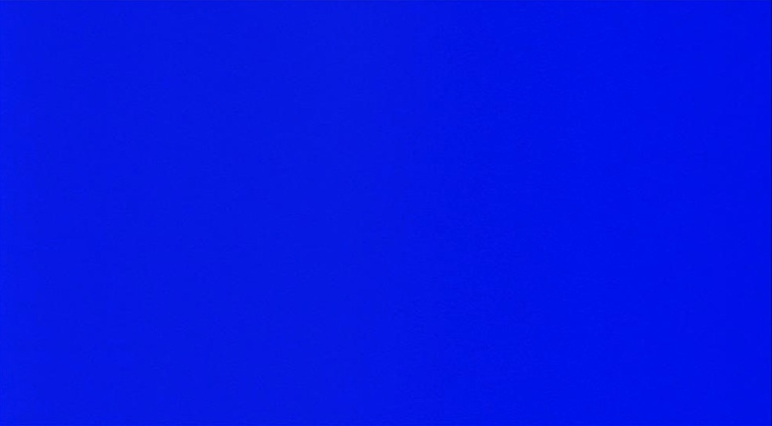
In terms of how the film troubled me personally, it certainly reminded me of the situation many people in the world are facing currently. Isolation, loneliness, uncontrollable illness, the breaking down of the human body, drug treatments, the facing of one’s life and soul, and death. Jarman discussing his thoughts from his hospital bed seemed all to familiar in the light of what’s going on in certain places in terms of COVID-19 wards and the death and sorrow and fear that must occur there.
In total, I found myself lucky and grateful that I was in the pain or having the experiences that Jarman was having while making this film. The film also made me very mournful specifically for the loss of queer life and life in general that was lost and eroded due to the AIDS crisis. Blue stands as a testament to Jarman’s career as a well as all victims of AIDS and those that refused to fade quietly away.
Bibliography:
Blue. Jarman, 1993. Film.
 Film, Gender, Sexuality
Grayson,
It was very interesting to read your post. Personally, I had trouble paying attention to the film since it was only a blue screen, but I had not really considered just how powerful that one image could be, as you discuss here. It certainly is a very intriguing insight into Jarman’s experience near the end of his life, and I can see why you use it to argue that “Blue” is a film. I also never even considered the similarities between Jarman’s AIDS struggle and our current situation with the coronavirus, but it makes complete sense. After reading your post, I almost want to watch the film again and think about it in relation to this quarantine. Great thoughts!
LikeLiked by 1 person
Grayson,
I enjoyed reading about your thoughts on the film. I, too, agree that Blue should be considered a filmic work. After all, what is a film if not the experience of a story? This was Jarman’s experience – poignant, difficult, and jarring. He was intentional as both an artist and a filmmaker. He knew how different forms of art convey messages differently, and he specifically chose make the concept of Blue into a film for its impact. As for comparing the film to the current coronavirus pandemic, I hadn’t thought of that before, but now, looking back, it makes a lot of sense. I was left with a deep sense of unease after I watched the film. Perhaps some part of me, like you said, identified with the loss of control, isolation, and loneliness. Thank you for the insight!
LikeLiked by 1 person
I wholeheartedly agree!!! Film, just like all art, is in the eye of the beholder! If you choose not to peer deeper into the blue, not to explore further into the grip of this film, then you will leave missing important pieces of Jarman’s last breath into the world. When you brought up Corona, I completely related. The sense of droning and spiraling in quarantine, while obviously nowhere near as physically damaging as AIDS, connected me deeply to the experience of the level of internal contemplation. I think you are correct in connecting it to COVID wards as well- that sense of doom and uncertain-certainty of those on death’s door. I experienced the film like a hypnosis- it drew me in further and further over time, until I was, in essence, blue myself. It makes me sad that not everyone experiences it this way, as I feel the perspective it gave me on the queer AIDS experience is invaluable. The queer community is my home and my family, and listening to this felt so important and heartbreaking to me. Thanks for your response!
LikeLiked by 1 person